
The Make4Change project aimed to strengthen the employability of unemployed, young people and immigrants outside the labor market through digital fabrication and making. It was funded by the European structural fund.
I took the lead in writing the project application for Make4Change, based on the shared ideas of the project team, which we developed during FabAcademy and the Critical making summerschool. It was the first project where I led the funding application writing, and we were so happy to get positive news and start working on our shared vision! During the three year timespan we collaborated with such youth and immigrant facing organzations such as Business Oulu, the Oulu Youth Workshop, and Auta Lasta Ry.
My main duties in Make4Chage related to project management and communication. I also carried out independent research, and supported the PhD students working on the project in workshop planning, data collection planning and analysis – I am a co-supervisor for Marta’s PhD thesis. I also supported in facilitating hands-on workshops when needed.
Empowering Youth and Immigrants Through Digital Fabrication and advocacy
Our motivation for starting the project was that while Oulu region in Finland is a vibrant growth center, youth unemployment remains high, and an increasing number of immigrants find themselves outside the labor market. We discussed a lot about polarization of society, and the digital divide, and this is where we though Make4Change could really help make a difference, helping equip young people and immigrants with the skills they need to thrive in a digital-first world, creating communities, and stressing finding your own voice and agency.
At the heart of Make4Change was the philosophy of “making”—a hands-on approach that not only teaches design and technical skills but also fosters critical thinking, problem-solving, and creativity. By embracing digital fabrication and technology, we hoped our participants can gain essential skills that bridge the digital divide, helping them prepare for work and study in a world where digital competencies are crucial.
The Make4Change program was designed around three sets of 6-8 workshop series, welcoming unemployed youth and immigrants from the Oulu area. In these workshops, participants learned to use tools such as laser cutters, 3D printers, and programming software. They worked on collaborative projects that address real community needs, focusing on designing and producing items that carry a message and can benefit local charities and organizations. Participants also gained exposure to business thinking, user-centered design, and entrepreneurship—valuable insights that can guide them towards future opportunities.
And the best part? Participants had the opportunity to choose how much they want to engage. From attending every workshop in a series to sampling just one session—such as 3D design—participation was entirely voluntary, allowing them to explore and experiment with what interests them most.
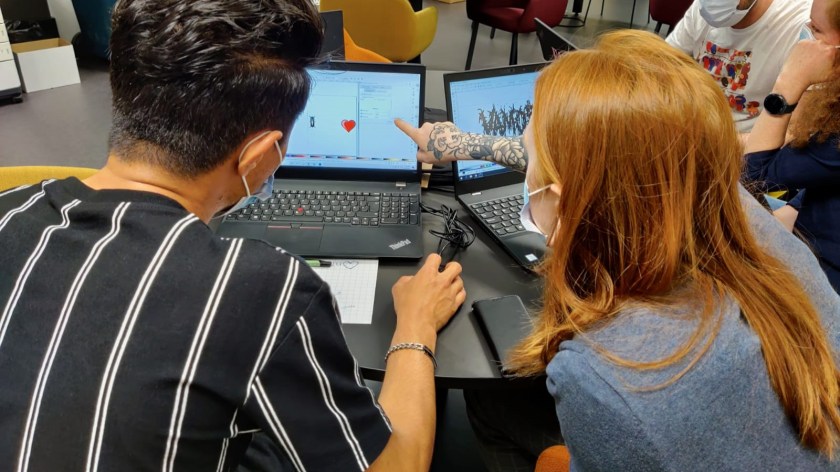
A typical starter workshop included 2D design with Inkscape 
This was started either by drawing by hand and digitizing, or by finding an image online to morify 
Once the designs were ready they were cut with a vinyl cutter 
and prepared for pressing onto canvas 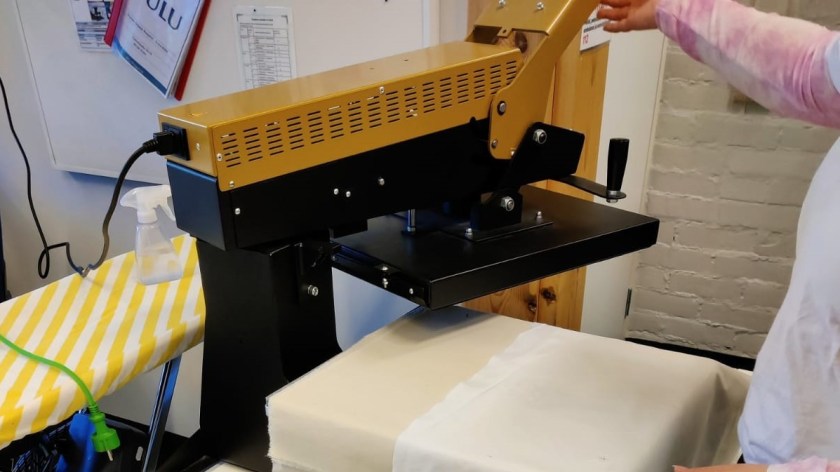
The designs were pressed onto canvas using a heatpress, or more simply an iron 
and the participants created meaningful objects to represent their organization or a cause that they cared about 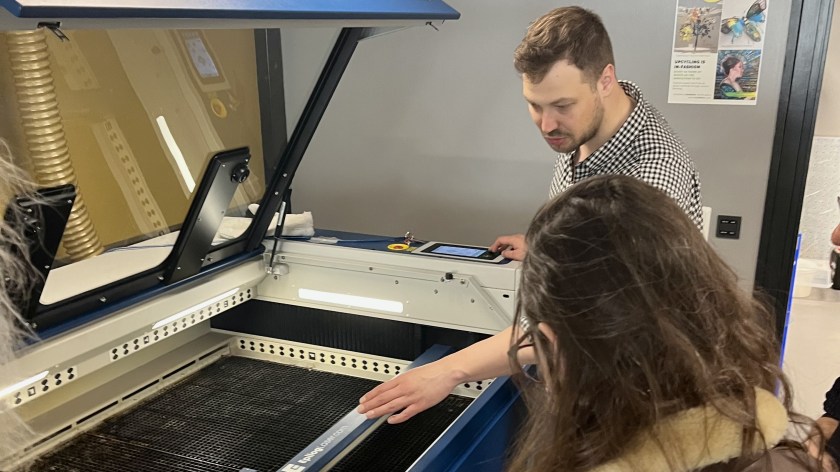
Next, we progressed to learning how a laser cutter works 
participants used their knowledge in Inkscape to prepare designs, and exlored the end results using different materials and settings 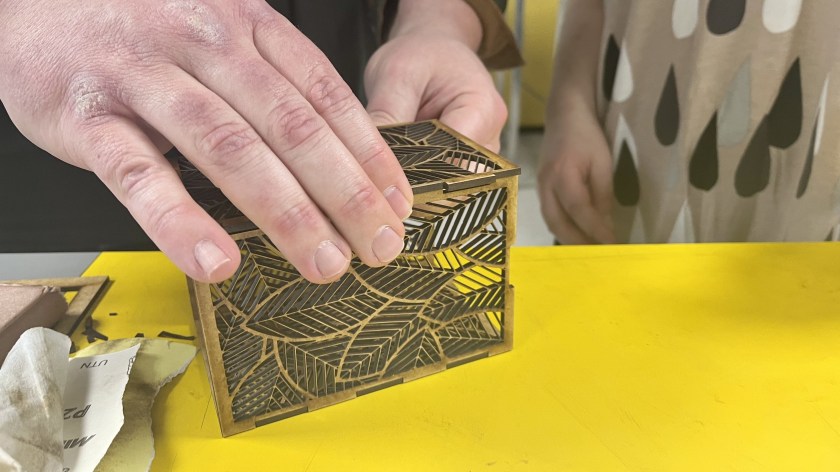
then they moved to create 3D objects with the laser 
such as these simple lanterns 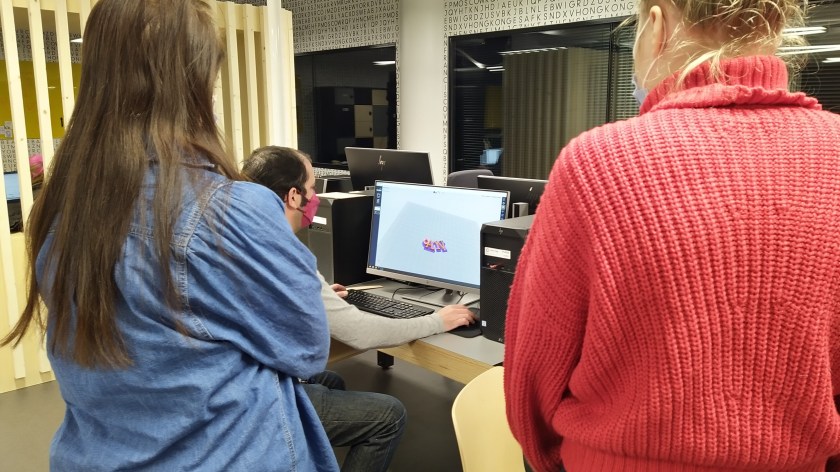
next we progressed to 3D design 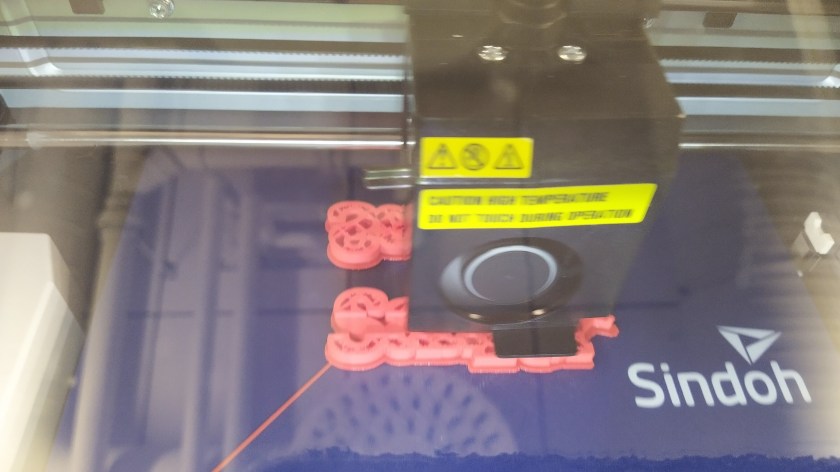
and printing 
To create personally meaningful objects 
First electronics projects such as this LED lamp often included both 2D designed and 3D designed parts 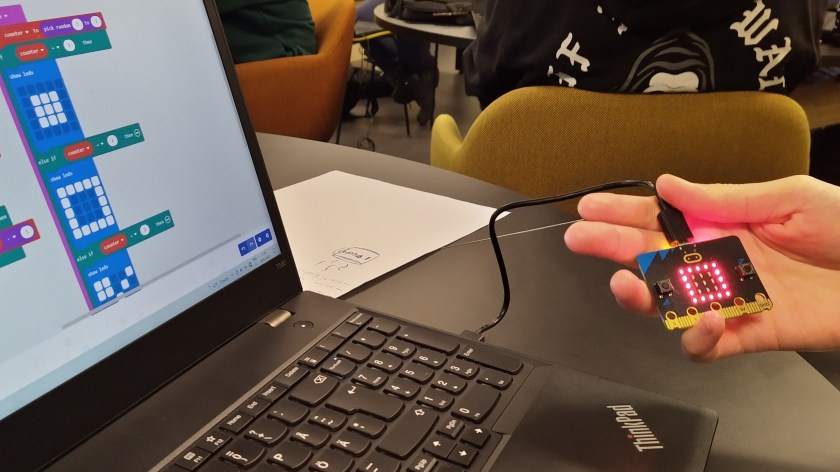
The participants also had a chance to learn embedded programming using micro:bits 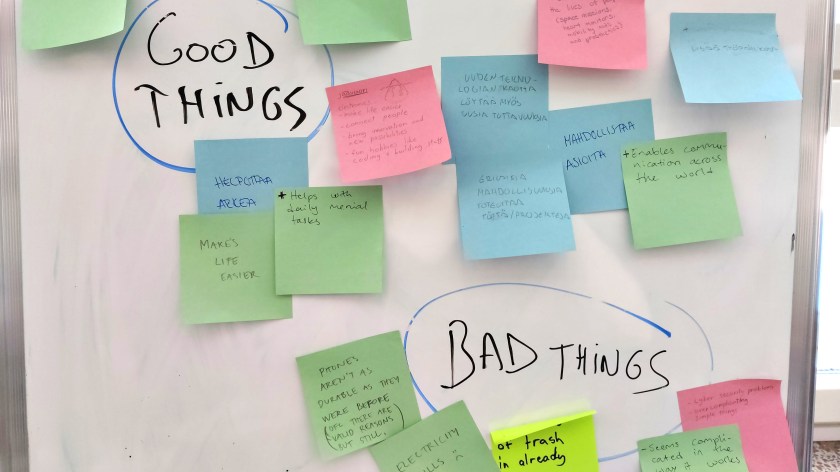
And they ideated awesome future technologies 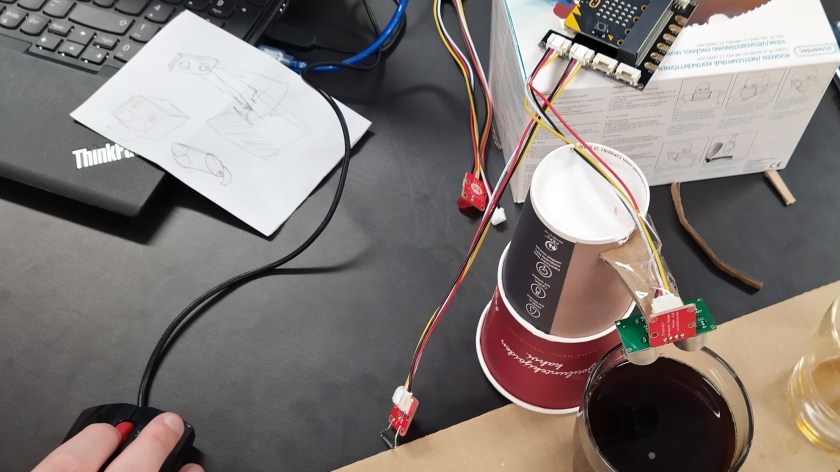
suc 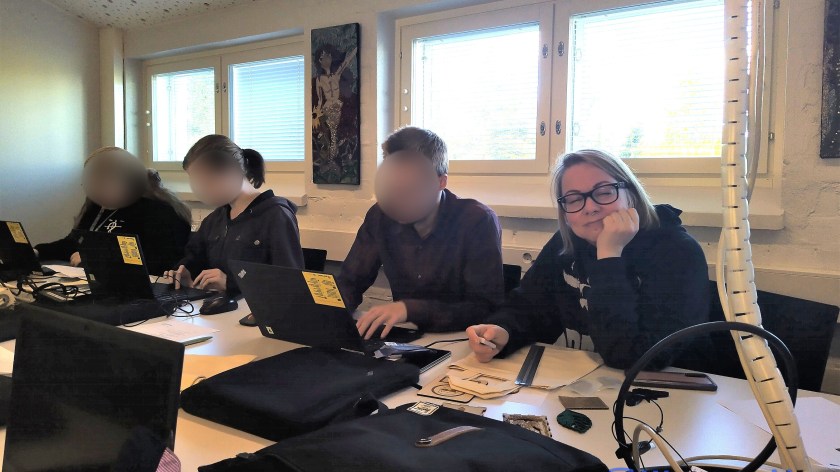
An important part of the making philosophy is sharing with others – And learning by making mistakes. Pictured here a postdoc who is probably smiling because she knew how to troubleshoot some error she encountered before
The ultimate goal of Make4Change was to help participants build a future-ready skill set that fosters innovation, inclusion, and self-confidence. Through this project, we’re closing the digital divide, reducing inequality, and creating pathways toward employment for those at risk of exclusion. By connecting young people and immigrants with practical skills and meaningful work, Make4Change helped empower them to thrive in Finnish society and prevent the cycle of unemployment in Oulu and beyond.
Make4Change also received further funding, and we continued the collaboration under the name ARTiFAB – refining our ideas based on our results and experiences, this time weaving in more art and self expression.
Dissemination of project results
During the project, we engaged quite a lot in disseminating some of the practical experiences within the FabLab networks around the world, as well as in our local community. I took the lead in planning and organizing these events that include local events such as researcher’s night in Oulu, but also workshops that we arranged in conferences such as FAB16 and FabLearn Europe. In this example workshop held at FAB16 conference, we presented experiences and insights from our first project year, and invited practitioners and researchers to discuss with us how to best empower different marginalized, minority or at risk populations in FabLabs and makerspaces.
Example research: Exploring how teens transform the future of learning through self-guided, community-based digital fabrication
An example of a research effort in the Make4Change project that I was leading includes investigating a novel approach to learning in a local FabLab where teens, with minimal guidance, designed and prototype their vision of a future school. Using Nexus Analysis, our study unpacked how their backgrounds, peer interactions, and workspace tools influence their design decisions. In the paper published in CSCW proceesings in 2024, we present insights into fostering informal, peer-driven learning, and implications for educators and makerspace coordinators aiming to empower youth in creative and technological spaces. Our paper provides a unique look at independent, hands-on collaboration, challenging traditional education models and revealing exciting paths for future research in digital fabrication and maker culture.
Invited talks and other dissemination events
- Researchers night 2024 Oulu: Digital technology from many angles [dissemination event targeting the local community]
- Hartikainen, H.. 2.8.2023. University of Florida. “Methods and experiences of Design activism projects with Children and youth”. Guest lecture at the Department of Computer and Information Science and Engineering (CISE). [Invited talk]
- Hartikainen, H. 21.6.2023. Texas AM. “Design activism with Children and youth: Methods and Experiences”. Guest lecture at the Institute of Technology Infused Learning. [Invited talk]
- Hartikainen, H. 2.3.2023. University College London. “Digital fabrication and making as a tool for activism and empowerment”. Intellectual life -Seminar at the UCL Knowledge lab. [Invited talk]
- Researchers night 2023 Oulu. Digital technology from many angles workshop [dissemination event targeting the local community]
- Oulu arts Night. 2022. Kerro kantasi korulla! Come make a statement! Popup workshop [Workshop targeting the local community]
- Fab16 conference. 2021. Let’s #make4change: how can we narrow the digital divide through digital fabrication and making? [Workshop targeting researchers]
Related publications
- Hartikainen, H. Ventä-Olkkonen, L., Cortés Orduña, M., Sanchez Milara, I., Käsmä, M. and Kuure, L. 2024. Making The Future School: An Analysis of Teens’ Collaborative Digital Fabrication Project. Proc. ACM Hum.-Comput. Interact. 8, CSCW1, Article 91 (April 2024), 37 pages. https://doi.org/10.1145/3637368
- Hartikainen, H. Ventä-Olkkonen, L., Cortés, M., Sanchez Milara, I., Sharma, S., Norouzi, B., Kinnula, M. (2022). A Series of Fortunate Accidents: Lessons learned When Things Go Sideways In Making Projects with Children. In 6th Fablearn Europe / MakeEd Conference 2022 (FabLearn Europe / MakeEd 2022), May 30-31, 2022. Copenhagen, Denmark. ACM, New York, NY. 6 pages. https://doi.org/10.1145/3535227.3535247
- Hartikainen, H., Cortés, M., Sanchez Milara, I., Käsmä, M., Ventä-Olkkonen, L.(2021). Make4Change: Empowering Unemployed Youth Through Digital Fabrication. In FabLearn Europe / MakeEd 2021 – An International Conference on Computing, Design and Making in Education (FabLearn Europe /MakeEd 2021), June 02, 03, 2021, St. Gallen, Switzerland. ACM, New York,NY, USA, 5 pages. https://doi.org/10.1145/3466725.3466763
 Heidi Hartikainen