
After FabAcademy I continued studying digital fabrication on UBI summer school in 2019 titled “critical making, design for activism led by Eric Paulos and Jill Miller from UC Berkeley, and Georgi V. Georgiev from University of Oulu. The workshop combined digital fabrication with activisim, a combination that influenced me greatly – After all, who doesn’t have a man they need to fight?
Before the workshop, I spent a week reading about how to make an impact, starting with the Letter from Birmingam Jail (King, M. L., Jr., 1963), and about the dramaturgy of the political rally (Mayo Jr. JM, 1978), moving to design activism and the power of design for positive social and environmental change (Fuad-Luke, 2013), how objects can change the world by out-designing authority (Flood & Grindon, 2014), and how HCI design can express matters of concern by communicating the factors and consequences of issues (DiSalvo et al., 2014). We also read a practical a guidebook for peaceful protesters, activists, and community organizers who aspire to challenge systemic oppression (Popovic S, 2015), and a book about leveraging the power of storytelling, culture, and creativity to drive our movements to success (Reinsborough P & Doyle C, 2017).
In the class, we spent time looking at the history of protest strategies used by activist groups around the world, e.g., Martin Luther King and civil rights protests, The Free Speech Movement in Berkeley, the Women’s March, Pussy Riot and #MeToo movement and discussing where design could have enhanced, changed or altered the protestors’ messages. At the same time, we worked in groups, thinking of socially or culturally relevant issues we care about, and used digital fabrication to develop a thought provoking protest tool intended for use in public spaces.
My group decided to create a small prototype of a light aiming to raise awareness of how common different mental health issues are, and to reduce the stigma attached so that the threshold to seek support would feel lower to those that experiene them. The sculpture would include multiple silhouettes of people, and be placed at a busy public area such as a town square or a library. It would interact with discrete wearable pinbuttons. Everytime someone with the wearable was to come near the sculpture, one of the heads would light up to show support. Together with my team mates Jenny and Yazan, embarked to implement the light sculpture and the wearable using laser cutting and electronics.
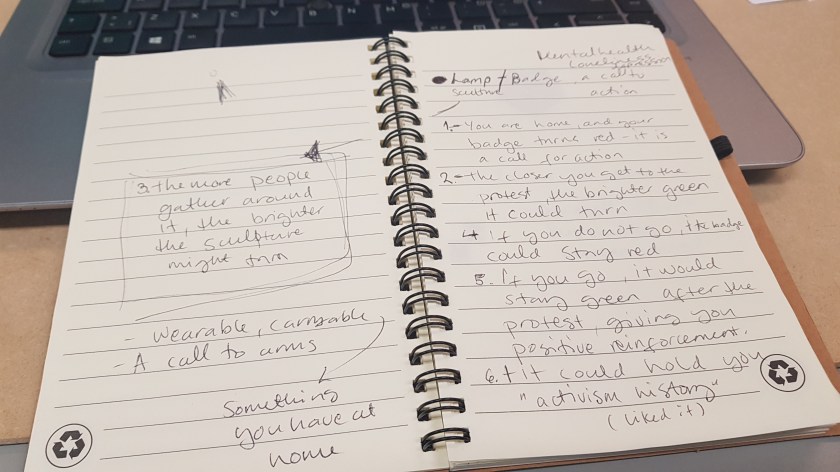
Ideating the project and how to implement it 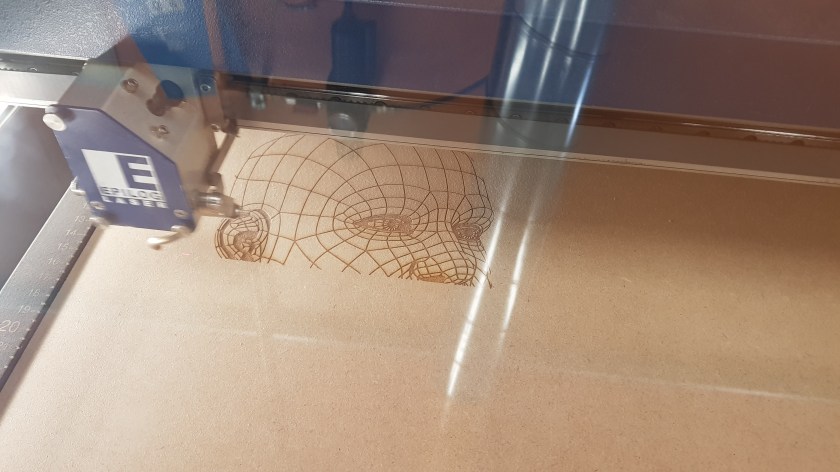
Laser cutting the first heads 
We did a quick and dirty prototype of the base using cardboard first, just to see how it would work 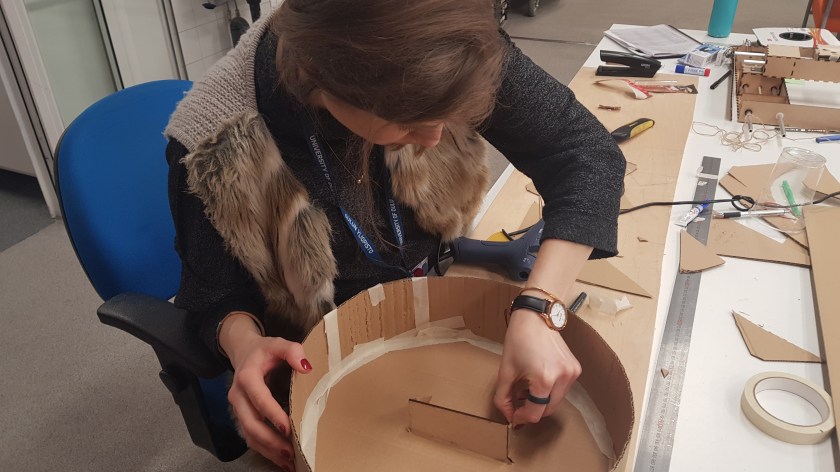
Jenny assembling the first base 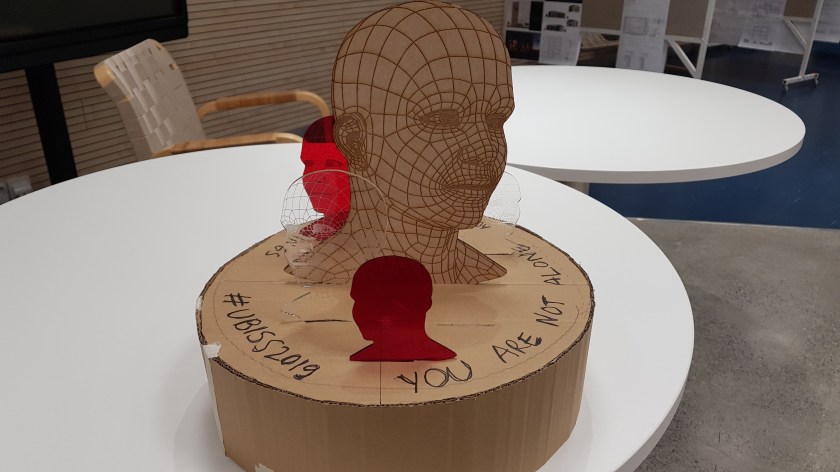
You get the idea 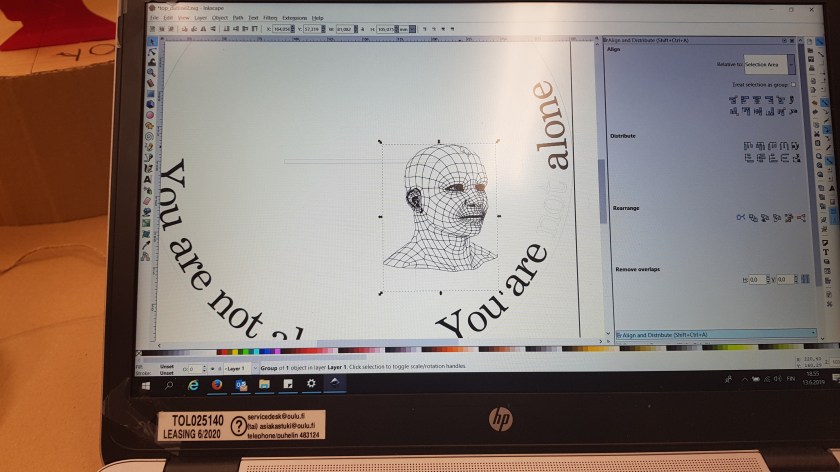
Designing the base with Inkscape 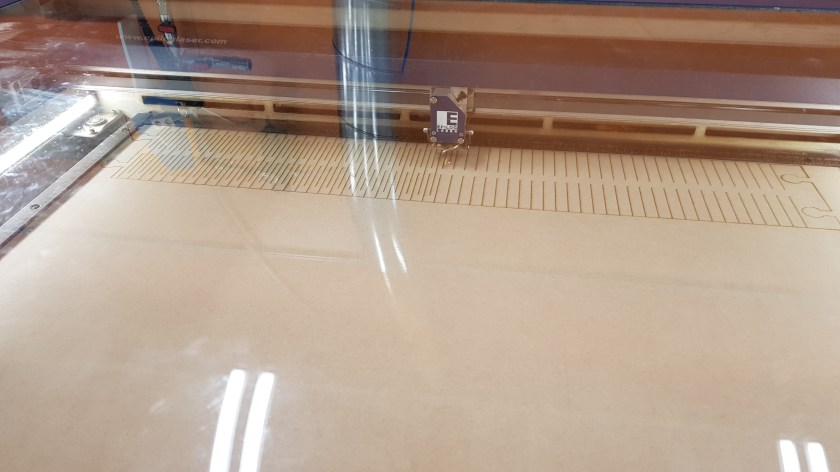
Creating the curved shape for it with a living hinge 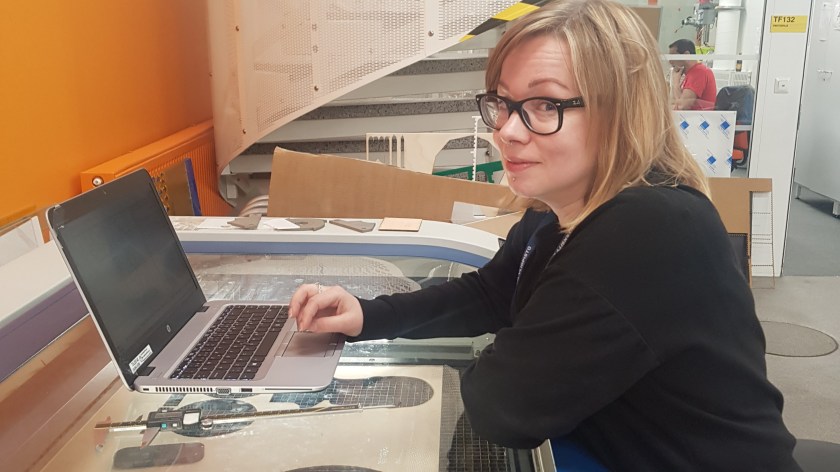
Laser cutter monitor on duty 
Very happy with the finished prototype 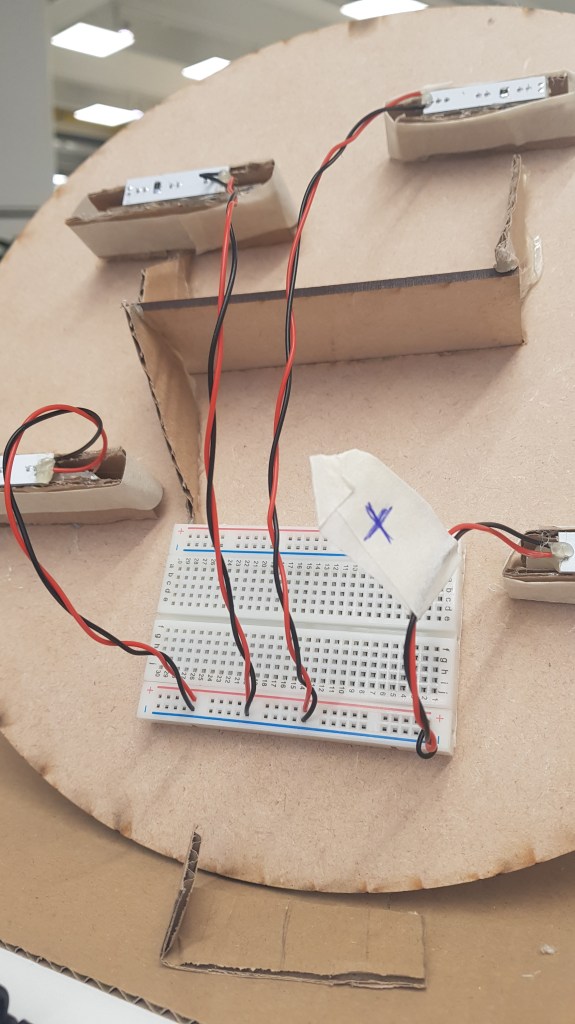
The base hides the electronics needed to light up the heads 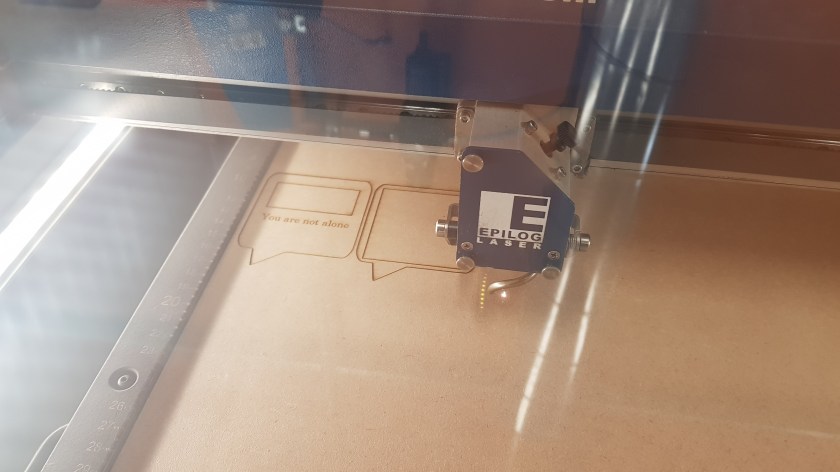
Laser cutting the case for the wearable 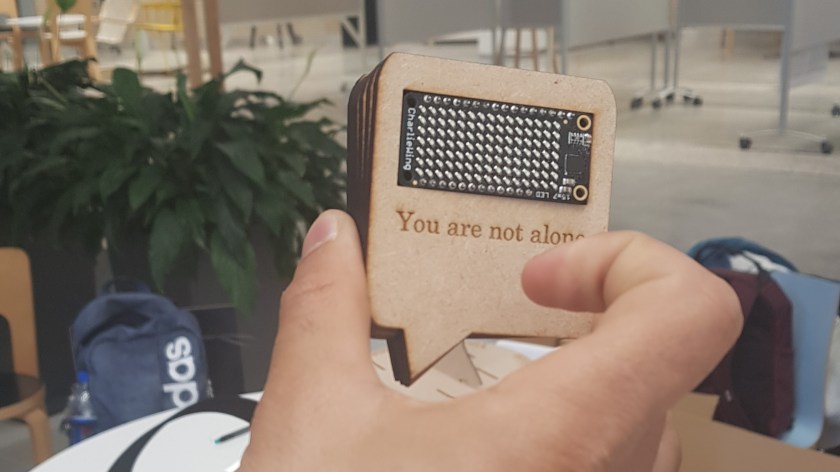
A bit chunky 
But works!
After the summer school, Jenny who had embarked on her first Digital Fabrication project with us disassembled the sculpture, and took it home to the UK with her as a reminder of the good time we had during that week with lots of pizza and late nights. I am happy to say I made a friend during that summer school, and have later also visited her home organization (University College London) in 2023, invited by her professor Asimina Vasalou. During a month long research visit I participated in research in the lab, and also gave a guest lecture about how we have explored design activism in our later projects such as Make-A-Difference, Make4Change and ARTiFAB.
 Heidi Hartikainen